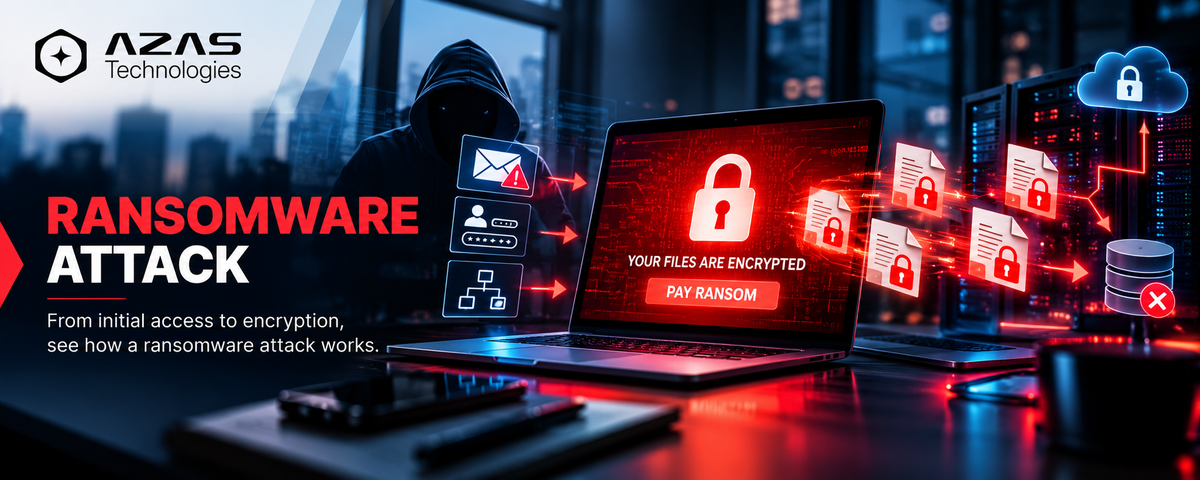
Cybersecurity Awareness | AZAS Technologies | 7-minute read
Introduction: Why Ransomware Is a Major Cybersecurity Threat
In today’s digital landscape, ransomware has emerged as one of the most disruptive cybersecurity threats facing organizations worldwide. From small businesses to multinational enterprises, ransomware attacks can bring operations to a standstill, compromise sensitive information, and cause significant financial losses.
For businesses in the UAE, where digital transformation, cloud adoption, and interconnected IT environments continue to expand, ransomware protection is an essential component of cybersecurity strategy.
At AZAS Technologies, we help organizations strengthen their security posture through advanced endpoint protection, next-generation firewalls, managed detection and response (MDR), and vulnerability assessment and penetration testing (VAPT).
1. What Is Ransomware?
Ransomware is a type of malicious software (malware) designed to prevent users from accessing their systems or data, typically by encrypting important files. Cybercriminals then demand a ransom payment in exchange for a decryption key or restoration of access.
Modern ransomware attacks may also involve stealing confidential information and threatening to publish it unless a ransom is paid.
A ransomware incident can affect file servers, workstations, databases, virtual machines, backup repositories, and cloud-connected environments.
2. How Does a Ransomware Attack Work?
A ransomware attack typically follows several stages:
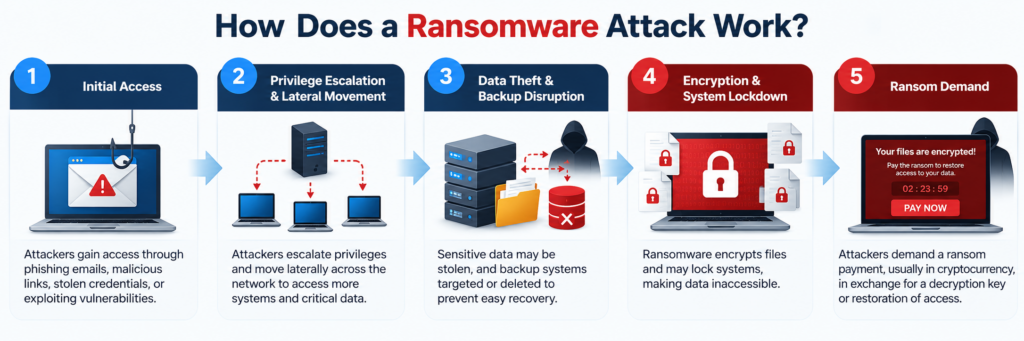
Not every attack follows the same sequence. Some attackers steal data without encrypting it, while others deploy ransomware quickly after gaining access.
Common Types of Ransomware
Crypto Ransomware: Encrypts important files and demands payment for a decryption key.
Locker Ransomware: Restricts access to a device or operating system rather than encrypting individual files.
Double Extortion Ransomware: Combines file encryption with data theft and threats to expose stolen information.
Ransomware-as-a-Service (RaaS): A criminal business model where ransomware developers provide tools and infrastructure to affiliates who conduct attacks.
How Ransomware Impacts Businesses
A successful ransomware attack can cause significant operational and financial disruption.
- Business downtime and interruption of critical services
- Loss of access to sensitive business information
- Financial losses from recovery and operational disruption
- Reputational damage and loss of customer trust
- Potential regulatory and contractual consequences
- Exposure of confidential customer or employee information
For UAE organizations operating in sectors such as healthcare, hospitality, retail, financial services, and logistics, prolonged service disruption can have particularly serious consequences.
How to Protect Your Business Against Ransomware
Effective ransomware protection requires multiple security layers rather than relying on a single product.
Deploy Advanced Endpoint Protection (EDR/XDR)
Endpoint Detection and Response (EDR) and Extended Detection and Response (XDR) solutions help identify suspicious behavior, investigate threats, and contain compromised endpoints.
Implement Next-Generation Firewalls
Next-generation firewalls help control network traffic, detect malicious activity, and reduce exposure to known attack techniques.
Conduct Regular VAPT Assessments
Vulnerability Assessment and Penetration Testing identifies weaknesses in systems, applications, and network infrastructure before attackers exploit them.
Maintain Secure and Tested Backups
Organizations should maintain isolated or immutable backups, restrict backup administration privileges, and regularly test restoration procedures.
Implement Multi-Factor Authentication
MFA adds protection against unauthorized access, especially for remote access, privileged accounts, and cloud services.
Enable 24/7 Security Monitoring
Managed Detection and Response services help identify suspicious activities, investigate incidents, and support timely containment.
Train Employees Against Phishing
Cybersecurity awareness training helps employees recognize suspicious attachments, malicious links, and social engineering attempts.
What Should You Do During a Ransomware Attack?
If your organization suspects ransomware activity, immediate action is essential.
- Isolate affected devices and network segments to reduce further spread.
- Activate the organization’s incident response plan.
- Preserve relevant logs and forensic evidence.
- Identify compromised accounts and restrict unauthorized access.
- Determine the extent of encryption, data theft, and infrastructure compromise.
- Restore systems from verified clean backups once the environment is safe.
- Assess applicable reporting, notification, and legal obligations.
Paying a ransom does not guarantee data recovery or prevent stolen information from being disclosed.
How AZAS Technologies Helps Protect Against Ransomware
AZAS Technologies provides cybersecurity solutions and services designed to help businesses improve their resilience against ransomware and other advanced cyber threats.
Our cybersecurity portfolio includes:
- Next-Generation Firewall Solutions: Strengthening network perimeter security and traffic inspection.
- EDR/XDR Security Solutions: Detecting and responding to advanced endpoint threats.
- Managed Detection and Response: Supporting continuous security monitoring, investigation, and incident response.
- Vulnerability Assessment & Penetration Testing: Identifying and prioritizing exploitable security weaknesses.
- Security Architecture & Hardening: Improving configurations, segmentation, and access controls.
By combining preventive controls, threat detection, security assessments, and response capabilities, AZAS Technologies helps organizations reduce cyber risk and strengthen operational resilience.
Industry Best Practices: CISA StopRansomware Guide
The cybersecurity recommendations outlined in this article are consistent with guidance published by the Cybersecurity and Infrastructure Security Agency (CISA) through its StopRansomware initiative.
The guide provides practical recommendations to help organizations strengthen their defenses against ransomware, including:
- Prevention: Implementing MFA, patch management, endpoint security, and secure backups.
- Detection: Identifying suspicious activity through security monitoring and threat detection.
- Incident Response: Isolating compromised systems, investigating incidents, and containing threats.
- Recovery: Restoring systems using verified backups and strengthening security controls to reduce the risk of reinfection.
For further technical guidance, refer to the official CISA StopRansomware Guide.
At AZAS Technologies, we help organizations implement cybersecurity solutions aligned with recognized security best practices, including Next-Generation Firewalls, EDR/XDR, Managed Detection and Response (MDR), and Vulnerability Assessment and Penetration Testing (VAPT).
Conclusion: Ransomware Prevention Starts Before an Attack
Ransomware is no longer just an IT problem. It is a business continuity, financial, and information security risk that requires proactive preparation.
Organizations that invest in strong security controls, employee awareness, continuous monitoring, and tested recovery procedures are better positioned to prevent attacks and recover when incidents occur.
AZAS Technologies — Innovating for a Secure Digital Future.
For assistance with ransomware protection, cybersecurity assessments, and advanced security solutions, visit AZAS Technologies.